
Bike Transport Services in India: The Complete Guide to Safe, Fast & Affordable Two-Wheeler Relocation
Moving to a new city and wondering what to do with your bike? You're not alone. It seems like a small problem until you're actually staring at a two-wheeler you can't leave behind — and definitely don't want to ride 1,500 kilometres to get there.
That's the gap Bike Transport Services in India have quietly filled over the last few years, turning a stressful DIY job into something you can sort out in a few clicks.
So let's get into it: how these services actually work, what separates a good provider from a sketchy one, and the questions people almost always ask before booking.
Why People Have Stopped Riding Their Bikes Cross-Country
There was a time when riding your own bike to a new city was just what you did. Pack a bag, fill the tank, go. But ask anyone who's done a twenty-hour highway ride, and they'll tell you it's not romantic. It's exhausting, and honestly, a little dangerous.
That's really why Bike Transport Services in India have grown into their own industry instead of staying a side note to packers and movers. A few things pushed this shift:
- Multi-day rides leave you physically drained, and fatigue on the highway is no small risk
- Your engine, tyres, and suspension take real wear from that kind of mileage
- Fuel, food, tolls, and hotel stays on a long ride often add up to more than a transport booking would cost
- Reputable providers now offer insurance, so you're not solely responsible if something goes wrong along the way
Put simply, riding stopped making sense once someone else could move your bike more safely for roughly the same price, or less.
How the Process Actually Works
Every company handles this a little differently, but most Bike Transport Services in India follow roughly the same steps.
Getting a Quote
You share your pickup city, drop city, bike model, and rough dates. In return, you get a price based on distance and whether you'd rather go with an open carrier or a closed container.
Inspecting the Bike Before Loading
A good provider checks the bike thoroughly before anything gets loaded — noting existing scratches, fuel level, and odometer reading. It isn't just paperwork; it protects you if a dispute over damage comes up later.
The Packing Stage
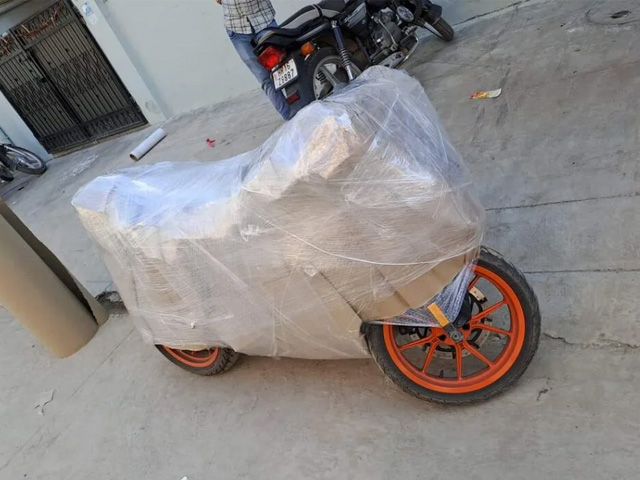
This is honestly where you can tell a serious company from an average one. Proper padding, foam sheets, bubble wrap, and covers on the tank and mirrors make a real difference in whether your bike arrives looking the way it left.
Loading and Securing
The bike gets strapped down on a carrier built specifically for this job, so it doesn't shift or bounce around during transit.
Tracking en Route
Many companies now offer some way to check where your bike is mid-journey, rather than just telling you it'll arrive "sometime soon."
Delivery
Once it arrives, there's usually a second inspection against the original condition report before the bike is handed back to you.
What Actually Matters When Choosing a Provider
Not every company offering Bike Transport Services in India puts the same care into the job, so it's worth being a little selective. Here's what's genuinely worth checking:
- Track record — reviews and years in operation tell you a lot
- Packing quality — ask directly what materials they use, don't assume
- Insurance terms — confirm exactly what's covered, ideally in writing
- Pricing clarity — a good sign is a quote that doesn't change after booking
- Realistic delivery windows — vague answers here are a red flag
- Tracking access — a nice-to-have that's becoming standard
- Network size — a company with branches across multiple states usually moves faster than one relying on subcontractors everywhere
What You're Actually Paying For
Prices for Bike Transport Services in India shift based on a handful of factors:
- Distance the bike is travelling
- Open carrier (cheaper) versus closed container (more protection, higher cost)
- The bike's size and weight, since heavier bikes can cost more to move
- Demand at the time, as relocation season tends to push prices up
- Extras like insurance, faster delivery, or door-to-door pickup
It's worth getting two or three quotes and comparing what's actually included, not just the number at the bottom.
Mistakes People Keep Making
-
Not reading the insurance terms closely enough
- Skipping the pre-transport inspection because it feels like a formality — it really isn't
- Choosing the cheapest option without checking packing standards
- Forgetting that most providers want the tank nearly empty before loading
- Not getting a delivery timeline in writing
None of these are hard to avoid. They just take a little patience before you sign anything.
Coverage Across the Country
One thing that's changed a lot recently is reach. Bike Transport Services in India aren't a metro-city thing anymore. Providers now extend into tier-2 and tier-3 towns as well, connecting states like Gujarat, Maharashtra, Uttar Pradesh, Haryana, Madhya Pradesh, and West Bengal, along with cities such as Ahmedabad, Delhi, Mumbai, Gurgaon, Noida, Ghaziabad, and Faridabad. Wherever you're headed, chances are someone already runs that route regularly.
Bottom Line
Moving your bike doesn't have to mean riding it yourself or handing it over to whoever quotes the lowest price. A solid provider of Bike Transport Services in India takes care of the packing, loading, insurance, and tracking, so the whole thing stops being something you have to worry about. As more people realise this is actually the easier, safer option, it's only going to become more common, which is good news for anyone dreading their next move.
Call NowFrequently Asked Questions
It depends on the route, but most intercity deliveries land somewhere between 3 and 7 days. Ask for a specific window at booking time rather than a vague estimate.
Most established providers offer coverage against accidental damage in transit, though coverage limits vary a lot between companies. Read the fine print before committing.
Usually, yes, or at least get it close to empty. It's a safety requirement for most carriers, so it's worth checking with your provider ahead of time rather than assuming.
Open carrier is cheaper but leaves the bike exposed to weather and road dust. Closed container costs more but is generally the safer call for a premium or high-value bike.
Many companies now offer this, either through an app, a tracking link, or regular updates. Worth asking about upfront if it matters to you.